
Close one eye and squint at a wall. Everything will probably still look perfectly normal, even though that eye may have a tiny blind spot. Our brains are pretty good at filling in the missing bits of what we see, which is why people can often go years without even realising they have a problem with their vision. It’s only when you get a proper checkup that you can find out if you’ve had a blind spot all along.
What Happens When You Get Your Eyes Tested?
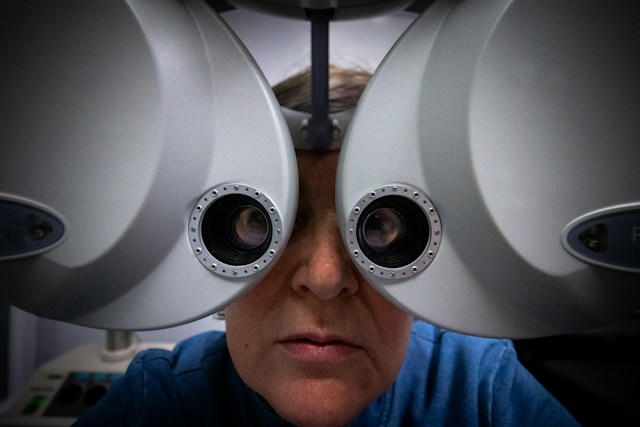
Doing a thorough eye test usually involves a few pretty simple but clever tests that look at how well your eyes are working. And I mean proper tests that assess how well you can see, and how healthy your eyes are. Each one looks at a different bit of how your eyes work.
- Reading an eye chart is one of the first things they do; it tells them just how clearly you can see things at a distance and up close.
- Then there’s the refraction test, where they try out loads of different lenses to see which one makes your sight the clearest and most comfortable.
- They’ll also take a look at the pressure in your eyes and get some images of the back of your eye to see if there’s any sign of things like glaucoma or macular disease.
- And visual field testing; that’s the one that checks what you can see out of the corner of your eye. It’s a sneaky one because a lot of people can lose a bit of their peripheral vision without even noticing.
All of these eye tests Perth clinics run are completely painless, and half the time they turn up some stuff you never even knew was going on. And even when you do get some bad news, at least you have a baseline to compare against next time. Which is often more useful than just one big test result.
When a Routine Appointment Just Ain’t Gonna Cut It?
Many eye problems start gradually and sneak up on you. But sometimes, things need to be treated right away. Healthdirect, the go-to health advice service here in Australia, points out that sudden vision stuff like flashes of light, a whole bunch of new floaters, suddenly losing the edge of your vision or seeing a big shadow creeping in, and your field of vision getting all distorted are all pretty serious. Don’t wait for an optometrist appointment if you’re worried about retinal detachment; head to the emergency room or give triple zero a call (000); get an ambulance sent over.
And don’t even think about waiting if your sight just goes dark on you. Healthdirect reckons you should get to the doctor or optometrist ASAP. If you can’t get hold of one, get to the nearest emergency room or ring 000. Any other vision things that start to go a bit wonky, still get to the doctor or optometrist; early treatment is your best bet for keeping your eyesight intact.
On the other hand, things like your vision blurring a bit, tired eyes, headaches after reading, dry or itchy eyes, those are all pretty normal and just need a routine check-up. But if one eye is throbbing in pain, get to the doctor pronto. And if it’s got some reduced vision to go along with that, treat it like an emergency.
How Often Do You Need an Eye Test?
The gap between eye tests depends on what’s going on with you. Healthdirect advises that adults over 60 should get their eye health looked at every one to two years. But for younger adults, it’s different; you might need more or less depending on whether you’re getting symptoms, if there’s a family history of eye problems, any health issues like diabetes, and if you wear glasses or contacts. Your optometrist will work out what makes sense for you based on all these factors.
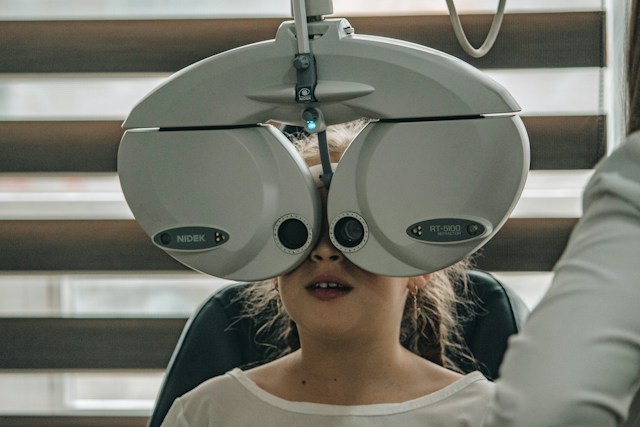
Kids are a bit different, though; they might not even realise their vision is off, and that’s because they’ve never seen anything better. Do an eye test when they start school so you can catch any issues early.
Getting Ready for Your Appointment: A Few Tips
Preparation is key; here’s what you can do to make the most of your eye test:
- Bring any glasses or contact lenses you’re using right now, along with the latest prescription if you have one.
- Write down any meds you’re on, and any family history of eye stuff; that’s all important for the optometrist to know.
- Try to put your symptoms in a way that makes sense; think about how they affect your daily life, for instance, is it hard to drive at night because your vision is bad, or is your vision all blurry at arm’s length?
- And if you live in Perth, with all that sunshine, think about how often you spend outside and whether you always wear sunglasses. The optometrist will probably want to know that.
Eye problems can be sneaking up on you without you even realising it. Regular checks are the way to go to catch any changes before they start affecting your everyday life.