

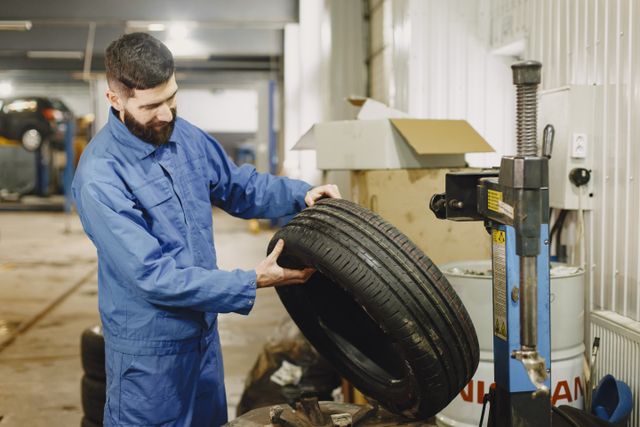
Just because there is a nail in the tyre does not necessarily mean the tyre needs replacing. It all depends on how the damage was sustained and the state of the tyre. Tyre punctures in Lilydale must abide by Victorian vehicle standards and allowable puncture repair guidelines. Knowing such guidelines will help motorists understand when repair is possible and when replacement is mandatory.
Where the Tyre Puncture Can Be Repaired
There are restrictions set by the Victorian vehicle standards regarding permanent puncture repairs Lilydale, and punctures can only be fixed within the crown of the tyre.
It is important to note that the shoulder, sidewall and bead cannot be permanently fixed in accordance with puncture repair requirements due to the fact that these areas undergo forces different from the crown area and have movement while driving. Repair in these areas will not ensure the required structural strength of the tyre.
Certain damages make the tyre ineligible for any kind of repair irrespective of where the puncture has been made.
What Does a Proper Puncture Repair Involve?
Permanent repair involves taking the tyre off the wheel to examine its inside surfaces and detect damages which cannot be noticed from outside. A screw or nail can result in further damage while a car is in motion. It can harm the tyre liner or its body. Inspection of the outside surface does not help determine whether the tyre should be repaired.
Preparation of the damaged area and installation of proper repair material is necessary. It can be a patch or a mushroom-headed plug depending on the repair technology used. The repair process has to meet all technological requirements and include necessary vulcanisation when needed.
All external damages have to be repaired according to all requirements. Proper repair prevents water from penetrating into the interior structure of the tyre. At the same time, it is important to check the condition of the tyre.
The Temporary Nature of a Plug at the Roadside
There are roadside fixes that entail fitting a plug without removing the tyre from the rim. The approach can enable the driver to get to an appropriate place for repair; however, it is not a substitute for a proper internal fix.
The tyre has to be dismounted and examined to see if it qualifies for any kind of permanent fix. Also, the plug is not proof that the tyre is fit to be driven. Internal damage may occur due to driving under low pressure.
Repairability and Roadworthiness, They’re Not the Same Thing
Two separate checks figure out whether a flat tyre can stay on the road. One checks whether the damage can be fixed under Victorian rules. The other checks whether the tyre meets the requirements for being on the road.
Victoria says that you need at least 1.5mm of tread in the main grooves in the centre of the tyre to be roadworthy. But this is about roadworthiness, not about whether the puncture can be fixed. A tyre might have enough tread left to be driveable but still be a write-off for repair. If the damage is too bad, you could be looking at buying a new one, even if it just has a small hole in it.
And it can go the other way too. A tyre might be fixable but if the tread is too worn out, then you can’t drive it. So drivers need to take the state of the tyre as a whole into account and not just look at the bit that’s been damaged.
Tyres that can run flat have some special rules around them because the manufacturer might say that certain types of repairs aren’t allowed. So the workshop needs to check what the manufacturer says first.
How Driving on a Flat Tyre Can Make Things Worse
If you drive on a flat tyre for too long, you can actually do more damage to it. The tyre gets a bit like a rubber band. It starts to flex and get really hot. This can damage the structure of the tyre even if the original hole was small. What might have been a simple fix turns into a reason to get a new one.
If your car has a tyre pressure warning light on the dashboard, pull over and check the tyre ASAP. The longer you drive on a flat tyre the more damage it will do and the more it’s going to cost to fix.
Other Things That Can Cause Slow Leaks Too
Not every tyre that loses air has a nail in it. Your valve stem can start to go a bit dodgy over time and corrosion on the wheel rim can cause the seal to fail. Bead leaks can happen where the tyre meets the wheel too. All these things can cause your tyre to slowly lose air over time.
If you’ve got a tyre that keeps losing air, don’t just top it up and drive on it. Get it checked out. A tech can have a look at the valve, the rim and the bead area to see what’s causing the problem. Doing regular checks of your tyre pressure also helps to catch any problems early on. And another thing, always keep your valve cap on to stop dirt and moisture getting in.

Issues to Consider Before Giving Approval for Repair Work
Drivers need to ask the workshop to take off the tyre and have it checked internally. At the same time, drivers need to be sure about the exact position of the puncture and whether it qualifies as meeting the repair criteria set in Victoria.
Workshop staff should indicate whether repair or replacement is needed. Drivers need to know whether their tyres have been damaged because they were not inflated enough. It is vital to consider all these factors while making a decision on repair or replacement. Even though the tyre may look fine externally, it may need to be replaced after internal examination.